Essential Communication Satellite Parts for Reliable Connectivity
Understanding the Core Communication Satellite Parts
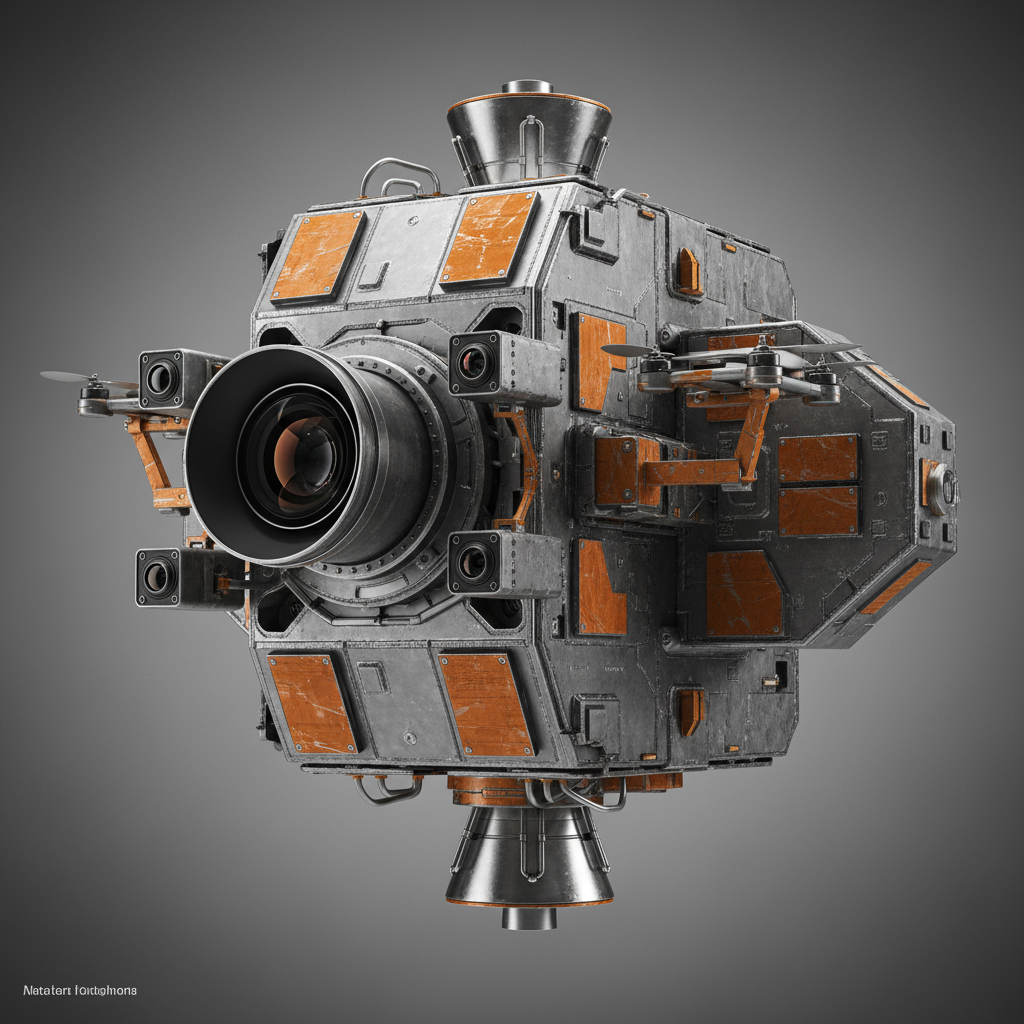
Having worked around industrial and aerospace equipment for quite some time now, I’ve noticed how communication satellites are less just “space stuff” and more like extremely complex factories orbiting us silently. It’s kind of humbling to think about the enormity and precision of each component. From the antenna that transmits your internet signals halfway across the globe, to the power systems ensuring everything stays on 24/7, every part has its stories.
Oddly enough, many people might underestimate how critical the communication satellite parts are – especially when you consider just how hostile space conditions can be. Constant radiation, vacuum, and temperature swings that would make most terrestrial devices fail in a blink…
Key Components and What Makes Them Tick
Of course, a communication satellite isn’t just a big radio. The parts that go into one are the result of years of iterative design, validation, and often painstaking field feedback. Take the RF (radio frequency) modules, for instance. They’re kind of the heart of the satellite’s capability to send and receive signals, and many engineers I’ve spoken to emphasize their ruggedness and precise tuning.
The power system is another beast altogether — solar panels coupled with high-density batteries keep the satellite functional even when it's in Earth’s shadow for extended periods. I remember a project where a vendor’s power supply design ended up outperforming specs by roughly 10%, which to the end-user meant fewer service drops. Small improvements like that ripple outwards in real terms.
| Component | Specification | Typical Material/Tech |
|---|---|---|
| Satellite Antenna | High-gain, steerable, 0.5–3 meters diameter | Aluminum alloy + Carbon fiber composite |
| RF Transceiver Module | Frequency range: 3.4–4.2 GHz (C-band) | Gallium arsenide semiconductors |
| Power Supply Unit | Solar cell efficiency ~29%, Lithium-ion battery 20–25 Ah | Multi-junction photovoltaic cells |
| Payload Control Electronics | Radiation-hardened processors, 2 GHz clock speed | Silicon on insulator (SOI) technology |
Vendor Viewpoint: What to Look For in Satellite Part Suppliers
Having been on the buying side of satellite parts, one lesson stands out: not all vendors are created equal. You might find one that’s great on price, but then their quality assurance and post-sale support can sometimes feel like a guessing game. I recall a situation where a vendor provided a top-notch antenna array but struggled with delivery timing — which is awful when mission windows wait for no one.
Conversely, some suppliers excel at customization—tailoring parts to specific orbital environments or unique signals. This flexibility can be the deciding factor when you’re working on highly specialized communication needs.
| Vendor | Product Range | Customization | Lead Time | Support & Testing |
|---|---|---|---|---|
| OrbitalTech Solutions | Full-spectrum RF & power units | High (tailored thermal design) | 6–8 weeks | Comprehensive (vibration, thermal vacuum) |
| SpaceWave Components | Antennas & control electronics | Medium (standard mods available) | 4–6 weeks | Basic (functional testing only) |
| Stellar Parts Inc. | Miscellaneous satellite parts | Low (catalog only) | 2–3 weeks | Minimal (spot checks) |
Why These Parts Truly Matter
Some years back, during a satellite launch prep, I had the chance to peek at the assembly stage and chat with the engineers about how a tiny misalignment in an antenna can cause signal degradation that translates into millions in lost revenue—or worse, failure of a mission. The margin for error is razor thin. You come to appreciate every nut and bolt, every semiconductor chip for what it does.
And frankly, it’s not just about the fancy specs on paper. The “feel” of a quality part is often something you develop over time. When you hold a well-crafted solar panel or a perfectly milled RF component, you sense the countless hours of R&D and testing behind it. Because endurance out there isn’t just a bonus—it’s a must.
For anyone diving into satellite tech, or scouting parts for a project, a good start is to understand these characteristics, match them carefully to mission specs, and never underestimate the subtleties of compatibility and environmental resilience.
In the end, if you want to truly explore the industry and possibly source communication satellite parts that blend quality and innovation—well, you’re getting into one of the most fascinating supply chains there is.
References:
1. Aerospace Component Industry Reports, 2023
2. “Satellite Systems Engineering,” Mark R. Chartrand, 2021
3. Personal interviews with satellite engineers and vendors, 2022-2024