AI Component Selection: Satellite Assembly & Fault Detection
Component Selection is a key solution in the aerospace industry, specifically within space system and Satellite onboard computer. This article explores how SpaceNavi Co.,Ltd. supports professionals with durable, high-performance products, and explains why this product is an ideal choice for businesses in these sectors.
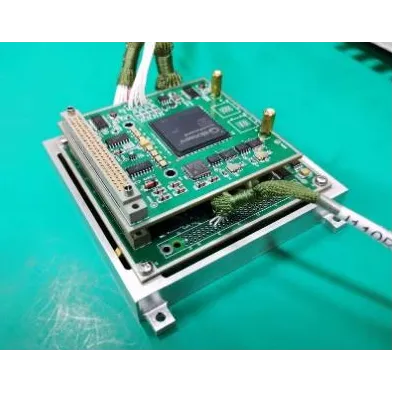
Table of Contents
- Component Selection Overview
- Benefits & Use Cases of Component Selection in Satellite onboard computer
- Cost, Maintenance & User Experience
- Sustainability & Market Trends in aerospace
- Conclusion on Component Selection from SpaceNavi Co.,Ltd.
Component Selection Overview
In the aerospace domain—especially for space systems and Satellite onboard computers—Component Selection is the disciplined process of choosing, screening, and qualifying every component that enters the flight computer’s bill of materials. It blends radiation analysis (TID/SEE), electrical derating, thermal margins, vibration survivability, and reliability modeling, all while ensuring long-lifecycle supply and traceability. For B2B decision makers, it is where mission risk, schedule, and cost converge: the earlier you lock the right components, the more predictable your satellite assembly, AIT flow, and in-orbit performance become.
A robust approach typically follows space-grade best practices influenced by standards such as ECSS and NASA EEE parts guidance, plus screening aligned with high-reliability test methods (e.g., temperature cycling, burn-in, and lot acceptance). Practical considerations include selecting rad-hard/rad-tolerant processors, memory technologies with ECC (MRAM/FRAM/NOR), latch-up–immune power components, low-drift oscillators, and connectors qualified for launch loads. The outcome is a coherent, verifiable component strategy that supports FDIR (fault detection, isolation, and recovery) and deterministic operation of the OBC.
SpaceNavi Co.,Ltd. provides this rigor as standard practice across its central computer portfolio, unifying parts engineering, obsolescence management, and counterfeit mitigation into one integrated process. The result: shorter procurement cycles, fewer last-minute redesigns, and flight computers you can qualify with confidence. Explore the product line here: https://www.space-navi.com/central-computer.html.
Benefits & Use Cases of Component Selection in Satellite onboard computer
Within a Satellite onboard computer (OBC), Component Selection underpins every subsystem: flight control, TT&C, payload interfacing, time synchronization, on-board data handling, and FDIR logic. Choosing the right microprocessor, EDAC-enabled memory, rad-tolerant DC–DC converters, and communication interfaces (such as SpaceWire, CAN, UART, or SpaceFibre-ready designs) ensures deterministic timing, graceful fault detection and recovery, and resilience to single-event effects. For LEO constellations, this approach scales: standardizing a qualified component set simplifies satellite assembly and accelerates AIT by minimizing rework and NCRs.
- Operational reliability: ECC-protected memory and latch-up protection raise in-orbit availability.
- Thermal-mechanical robustness: components screened for thermal cycling and random vibration reduce early-life anomalies.
- Lifecycle assurance: vetted multi-sourced components reduce obsolescence and supply chain risk.
- Software synergy: component-level determinism simplifies RTOS choices, verification, and FDIR tuning.
SpaceNavi Co.,Ltd. brings deep experience from heritage missions and new-space constellations, applying a reusable, evidence-backed component strategy to each central computer. The competitive advantage is clear: reduced integration friction, predictable performance across radiation and temperature extremes, and a clear documentation trail that streamlines customer qualification and audits.
Cost, Maintenance & User Experience
Total cost of ownership for a satellite OBC is driven less by unit price and more by risk, requalification, and in-orbit reliability. Smart Component Selection compresses schedules by avoiding late BOM changes and secondary test campaigns, stabilizes yield during manufacturing, and reduces downstream NRE tied to design respins. SpaceNavi Co.,Ltd. designs for durability—component-level derating, screening, and documentation—so customers benefit from predictable qualification and a lower cost of risk throughout the program lifecycle.
In service, satellites cannot be “maintained” traditionally. Reliability is the maintenance plan. By prioritizing components with robust SEE immunity, high-temperature margins, and proven solderability, SpaceNavi central computers enhance fault detection and isolation, allow safe-mode recovery, and support secure firmware updates and memory scrubbing strategies. Procurement teams and AIT managers report smoother handoffs, fewer line-stops, and clearer as-built records thanks to complete traceability and lot control—key factors for fleets and replenishment programs. The ROI stems from higher mission availability, better schedule fidelity, and simplified audits for primes and constellation operators alike.
Sustainability & Market Trends in aerospace
Sustainability in space is about longevity and responsible procurement. Durable OBCs reduce on-orbit failures and limit premature replenishment, cutting launch-related emissions across the mission portfolio. Trends shaping Component Selection include the adoption of radiation-tolerant COTS for cost-effective constellations, increasing compute density for edge processing and AI, and interfaces moving toward higher bandwidth (e.g., SpaceFibre) while retaining heritage compatibility. At the same time, regulations—from export controls to debris mitigation—are heightening documentation and traceability requirements, making disciplined component engineering indispensable.
SpaceNavi Co.,Ltd. aligns with these trends through proactive supply-chain stewardship, rigorous material traceability, and power-efficient designs that support thermal budgets and reduce mass. The company’s forward-thinking approach includes standardized .component libraries with proven screening histories, multi-sourcing strategies to enhance resilience, and design-for-reuse templates that shorten time-to-orbit while supporting eco-conscious manufacturing practices. For B2B decision makers balancing cost, compliance, and capability, this positions SpaceNavi as a dependable partner for the next wave of space system growth.
Conclusion on Component Selection from SpaceNavi Co.,Ltd.
Effective Component Selection is the foundation of reliable Satellite onboard computers. It aligns radiation tolerance, thermal margins, and supply-chain stability to deliver deterministic performance and robust fault detection and recovery. SpaceNavi Co.,Ltd. combines proven engineering methods with meticulous documentation and screening to help aerospace teams accelerate qualification and reduce risk. Choose a partner that treats every component as critical to mission success.
- Contact us: email: jl1sales02@space-navi.com
- Visit our website: https://www.space-navi.com